
Hairstyles for Thin Hair That Create a Fuller Shape
The best haircut for thin hair does not promise new density. It uses a strong outline, controlled layers, thoughtful length, and lightweight styling to make the hair you have look intentional and supported.

Quick answer: choose shape before volume products
For most people with thin or fine hair, reliable starting points are a blunt bob, collarbone lob, softly textured pixie, short crop, or a medium cut with light face-framing layers. A clean perimeter makes the ends look denser, while too many short layers can expose gaps and leave the bottom wispy.
Thin hair describes lower overall density; fine hair describes the diameter of each strand. You can have fine strands with plenty of hair, or coarser strands with lower density. Tell your stylist which issue you notice because the cutting plan is different.
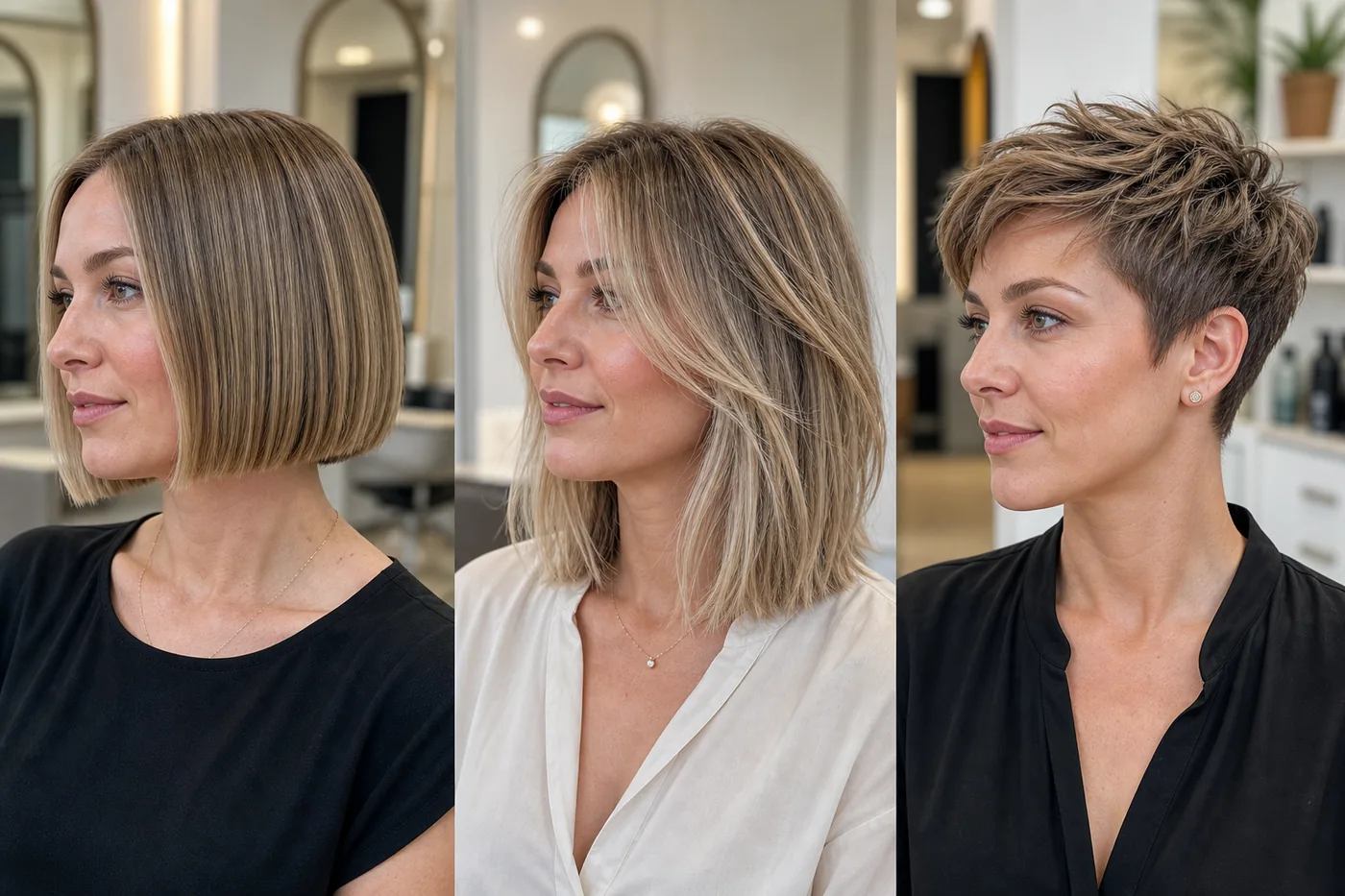
Six Hairstyles for Thin Hair Worth Previewing
Adapt the part, fringe, and length to your face shape, texture, hairline, and maintenance routine.
Blunt chin-length bob
A compact one-length edge makes the ends look stronger and reduces the see-through effect below the shoulders.
Ask your stylist: Keep the perimeter solid and add only invisible internal movement.
Collarbone lob
This keeps useful length while removing weak ends and avoiding too much weight at the roots.
Ask your stylist: Choose a full baseline, minimal graduation, and gentle face framing.
Textured pixie
Shorter hair is lighter, so the roots lift more easily and crown texture creates shape with less density.
Ask your stylist: Keep enough length on top and avoid over-thinning the sides.
Short textured crop
A crop makes deliberate texture the focus and is practical for men or anyone who wants low daily styling.
Ask your stylist: Preserve weight around the hairline and use point cutting carefully.
Soft shag-lite cut
A restrained shag adds movement to wavy fine hair without the empty ends of a dramatic layered cut.
Ask your stylist: Request long blended layers rather than a heavily razored finish.
Side-parted shoulder cut
A shifted part reduces a flat center line and creates asymmetric lift without sacrificing versatility.
Ask your stylist: Keep front pieces soft and avoid too many short crown layers.
Cutting Rules That Protect Visual Density
The goal is not maximum layering. It is a balanced silhouette with strong ends and movement in the right places.
Keep the perimeter intentional
A crisp baseline gives the eye one strong edge. If the last inches are sparse, removing them often looks fuller than preserving length at any cost.
Use fewer, longer layers
Long blended layers can prevent flatness, but many short layers remove weight from already limited density.
Treat bangs as a density decision
Wispy or curtain bangs can frame the face, but a heavy fringe borrows hair from the top and sides.
Match the cut to natural texture
Straight fine hair benefits from a strong line; wavy hair can use controlled layers; curly fine hair needs shape without excessive thinning.
Best Length for Thin Hair
Choose the point where your ends still look healthy and your daily routine remains realistic.
| Length | Works well when | Watch for | Preview test |
|---|---|---|---|
| Pixie to jaw | You want root lift, a defined outline, and quick drying. | Frequent trims and exposed cowlicks or hairline changes. | Compare top length, fringe, and side volume. |
| Chin to collarbone | You want the strongest balance of fullness and versatility. | Over-layering or ends that flip at the shoulder. | Test blunt, softly waved, and side-part versions. |
| Below shoulders | Your density is even and the ends remain substantial. | Weight pulling roots flat and transparent lower lengths. | Compare the current length with two shorter options. |
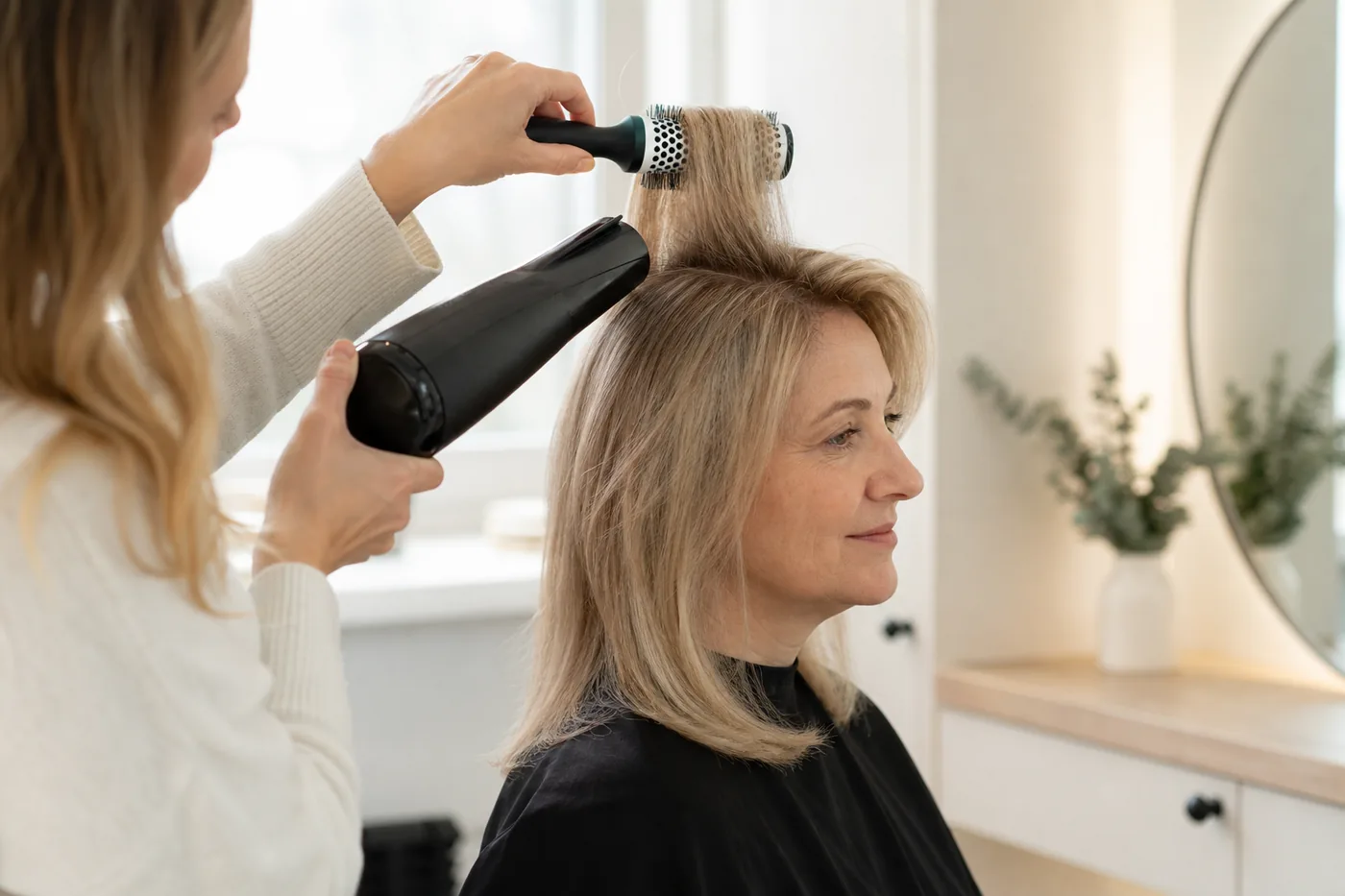
A Lightweight Styling Routine for More Lift
Thin hair often responds better to small amounts of product and deliberate drying than to heavy oils or repeated teasing.
- Start with a light base. Apply a small amount of volumizing mousse or spray mainly at the roots and mid-lengths.
- Dry against the resting direction. Lift sections with fingers or a round brush and move airflow from roots toward ends.
- Add bend, not tight curl. A soft bend widens the silhouette while keeping the ends connected.
- Finish selectively. Use dry texture spray only where separation is needed and keep rich oils on the very ends.
Common Mistakes That Make Thin Hair Look Flatter
Keeping damaged length
A shorter solid outline can look more polished and fuller than transparent lower lengths.
Asking for maximum layers
Layers are not automatically volume. Removing too much weight can make the scalp and gaps more visible.
Using heavy conditioner at the roots
Concentrate rich formulas where the hair tangles or feels dry.
Copying a thick-hair reference exactly
Ask the stylist to translate the silhouette for your density, texture, hairline, and growth pattern.
Preview the Silhouette Before Cutting
An AI preview is useful for comparing overall length, fringe, parting, and face balance. Generate the same haircut in two or three variations instead of treating one image as a promise.
- Use a clear front-facing photo with visible hairline and shoulders.
- Compare one conservative length and one shorter option.
- Check whether bangs take too much visual weight from the crown.
- Save the preferred result as a conversation reference for your stylist.
AI cannot diagnose hair loss or predict exact density, strand behavior, cowlicks, or salon results. Use it for direction, not as a guarantee.
Hairstyles for Thin Hair FAQ
What haircut makes thin hair look thicker?
A blunt bob or lob often creates the clearest fuller-looking edge. Short pixies and textured crops also help because shorter hair is easier to lift at the roots.
Are layers good for thin hair?
A few long blended layers can add movement. Many short or heavily razored layers can remove too much weight and make the ends look sparse.
Is short hair always better for thin hair?
No. Chin-to-collarbone lengths are often a strong compromise, while longer hair can work when density is even and the ends remain healthy.
Can thin hair wear bangs?
Yes, but choose the fringe density carefully. Wispy, side-swept, or curtain bangs usually use less hair than a heavy full fringe.
What is the difference between thin hair and fine hair?
Thin hair usually refers to fewer hairs across the scalp, while fine hair refers to small strand diameter.
When should thinning hair be checked by a professional?
Consider medical advice when thinning is sudden, patchy, painful, associated with scalp changes, or noticeably progressing.
Important: a haircut is not a hair-loss treatment
This guide is about visual shape and styling. Sudden shedding, bald patches, scalp pain, inflammation, or rapid change deserve assessment by a qualified clinician or dermatologist.
Continue Your Hairstyle Decision
AI Haircut Visualizer — Compare bobs, pixies, crops, bangs, and layered cuts on your own photo.
Short Hair Filter — Check whether a shorter outline gives your face and hair more balance.
What Haircut Should I Get? — Balance hair density with face shape, texture, lifestyle, and maintenance.
Hairstyles for Face Shape — Refine the shortlist using face proportions after choosing a density-friendly cut.
Haircuts for Straight Hair — Compare strong perimeters and connected layers when fine hair is also naturally straight.
Health and Hair-Loss References
American Academy of Dermatology
Medical overview of common hair-loss causes and signs that deserve assessment.
NHS hair loss guidance
Practical guidance on hair loss, possible causes, and when to speak with a doctor.
Choose a Fuller-Looking Shape Before the Salon
Compare a bob, lob, pixie, crop, or softly layered cut on your photo and take the best reference to your stylist.
Preview Hairstyles for Thin HairThis guide covers hairstyles for thin hair, short hairstyles for thin hair, haircuts for thin hair, and practical ways to preserve visual density.