
What Is the Name of This Hairstyle? Identify a Haircut
A hairstyle name is usually built from visible clues: length, outline, layers, fringe, texture, parting, and styling finish. Use this guide to describe a photo clearly, compare likely names, and bring a better reference to your stylist or AI haircut preview.
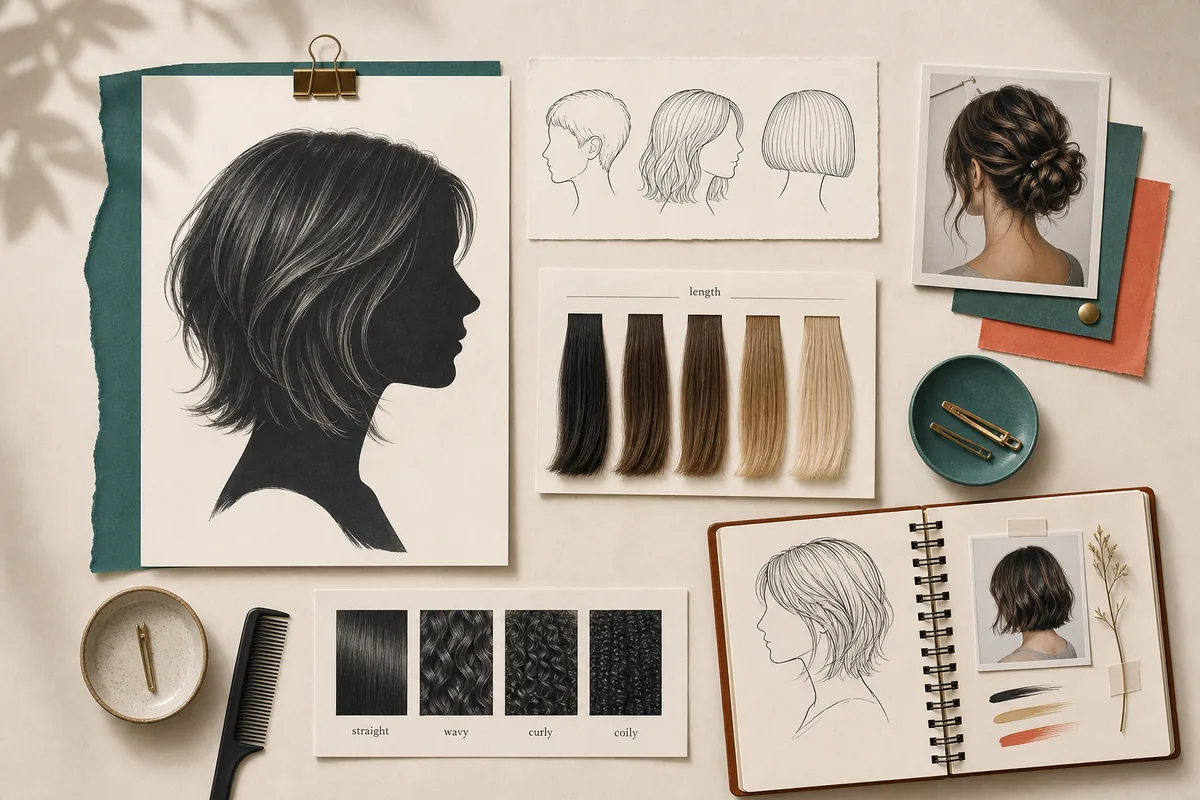
Quick answer: name the shape first, then the trend
If you are asking, “what is the name of this hairstyle?”, start with the broad cut family before naming the trend. A photo may look like a bob, lob, pixie, shag, wolf cut, butterfly cut, fade, textured crop, curtain hair, or layered long cut, but the final name depends on length, graduation, face framing, fringe, and texture.
The safest salon description combines one name with three concrete details: where the length ends, how the layers behave, and what the front pieces do. For example, “collarbone lob with curtain bangs and soft face-framing layers” is more useful than simply “K-pop hair” or “that TikTok cut.”
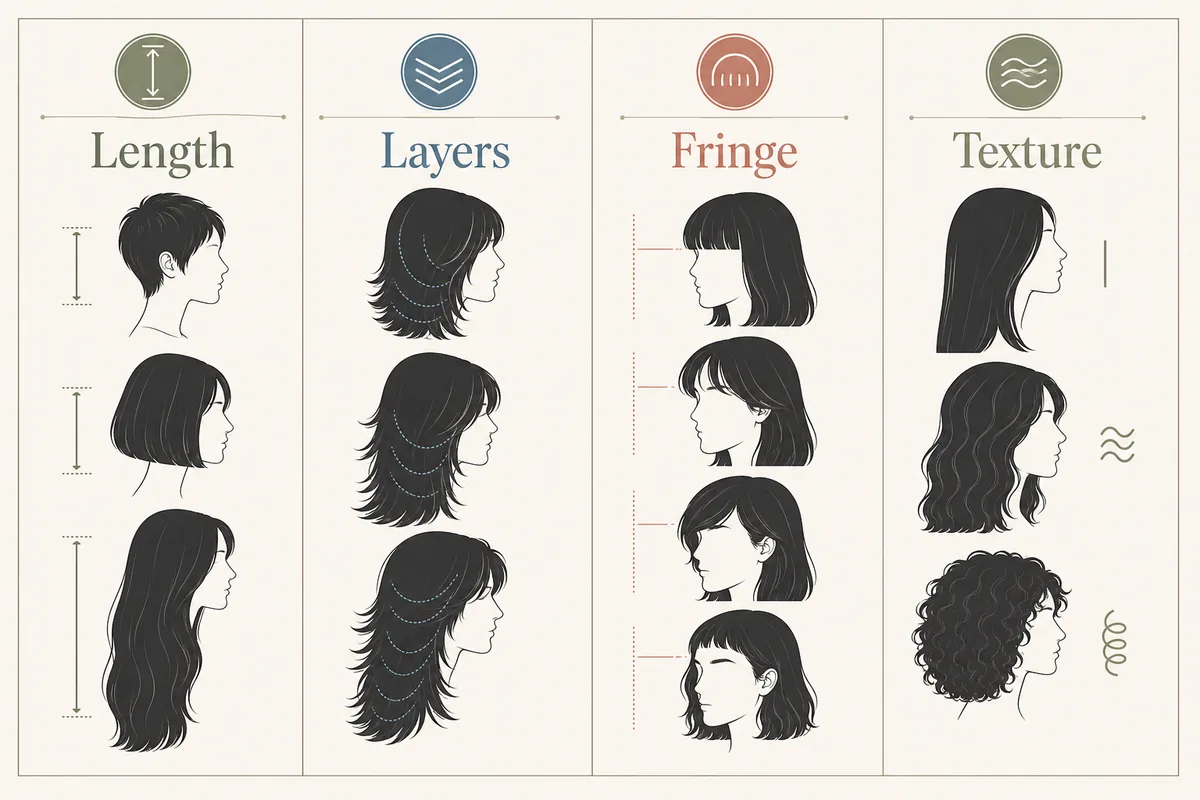
The 4 Clues That Reveal Most Hairstyle Names
Use this order when you inspect a screenshot, celebrity reference, salon photo, or AI haircut preview.
Length and outline
Check whether the cut sits above the ear, at the jaw, around the collarbone, below the shoulders, or in a tight tapered shape.
Layer pattern
Look for blunt ends, soft graduation, choppy layers, face-framing pieces, shaggy texture, or long internal layers.
Fringe and front pieces
Bangs, curtain bangs, side-swept fringe, money pieces, and cheekbone layers often change the name people search for.
Texture and finish
Straight, wavy, curly, coily, wet-look, fluffy, tousled, or polished styling can make the same cut look like a different trend.
Read the photo like a stylist reference
Do not judge only by the most dramatic part of the image. First trace the silhouette: top volume, side width, jawline edge, neckline, and the lowest visible length. Then look for repeating layer lines and front pieces.
If the photo is heavily styled, separate the haircut from the blowout. A butterfly cut can be curled smooth, a shag can be polished, and a bob can look longer when the head is angled.
Haircut Name Clue Matrix
Match what you see in the photo to a practical phrase you can search, preview, or say in a salon consultation.
| Photo clue | Useful words | Likely names | How to use it |
|---|---|---|---|
| Ends sit at the jaw or chin | chin-length, blunt, soft, tucked, rounded | French bob, blunt bob, soft bob, bixie | Mention whether the bottom edge is straight, curved, or layered. |
| Ends sit near the collarbone | lob, collarbone, shoulder-length, face-framing | long bob, layered lob, curtain-bang lob | Use this when a bob reference is longer than the jaw. |
| Heavy movement through the sides | shaggy, choppy, feathered, razored, lived-in | shag cut, wolf cut, modern mullet | Describe whether the volume is at the crown, cheekbones, or ends. |
| Short tapered sides | fade, taper, crop, undercut, low, mid, high | textured crop, low fade, undercut, crew cut | Specify side height and top texture; the same top can pair with many fades. |
| Front opens around the cheekbones | curtain, face-framing, bottleneck, side-swept | curtain bangs, butterfly cut, layered long hair | Name where the shortest front piece lands: cheekbone, jaw, or collarbone. |
| Long hair with airy movement | long layers, butterfly, U-shape, waves, volume | butterfly cut, layered long, long waves | Ask whether the layers remove weight or only frame the face. |
How to identify a hairstyle from a photo
Crop the image mentally into three zones: top, sides, and perimeter. The top tells you about volume and parting, the sides show width and texture, and the perimeter reveals the real haircut family. Many wrong guesses happen because the photo is judged from styling alone.
Next, write one plain sentence before searching: “It is a shoulder-length layered cut with curtain bangs and soft waves.” That sentence often leads to better matches than searching a single trend word.
- Use the clearest front or three-quarter photo you can find.
- Ignore color first; color can distract from shape.
- Look at where the shortest front layer lands.
- Compare against a few neighboring names before deciding.
Common names people mix up
A bob ends around the jaw; a lob usually lands between the jaw and collarbone. A pixie is shorter and more exposed, while a bixie keeps some bob-like softness. A shag depends on choppy layers and texture, while a wolf cut usually has stronger crown volume and a mullet-like outline.
For men’s cuts, the top and sides need separate names. “Textured crop with low fade” is much clearer than “fade haircut.” The fade describes the side transition; the crop describes the top.
- Bob vs lob: length is the main difference.
- Shag vs wolf cut: crown volume and back length matter.
- Fade vs taper: fade exposes more skin transition.
- Curtain bangs vs face-framing layers: fringe sits higher and closer to the forehead.
How to search when you only have a screenshot
Use a descriptive query that combines gender or style context, length, texture, and front detail. For example, “medium layered haircut curtain bangs wavy” or “short textured crop low fade fringe.” Add a year or trend name only after the basic shape matches.
If a celebrity or influencer photo inspired the search, look for a salon breakdown instead of copying the caption. Captions often use loose trend language, while salon pages mention the exact layer, fringe, and length choices.
- Search one feature at a time if results are noisy.
- Add “salon reference” or “haircut breakdown” for practical photos.
- Save 2-3 similar references, not one perfect image.
- Preview nearby styles before committing to a cut.
When to use AI preview after naming the cut
Once you have a likely name, preview the closest haircut on your own photo. A name that looks perfect on someone else can change when your face shape, hairline, density, and natural texture are different.
Use the preview for direction, not a final salon guarantee. Bring the name, the reference photo, and your preview together so the stylist can adapt the cut to your real hair.
- Try a safe option and a bold option on the same selfie.
- Compare front pieces around the cheekbones and jaw.
- Check whether the maintenance level fits your routine.
- Ask your stylist what must change for your hair texture.
A simple script for asking your stylist
Use this structure when the name is close but you are not fully sure. It turns a vague photo into a practical consultation.
- Name the closest family Say “I think this is a layered lob” or “this looks like a textured crop,” then show the reference.
- Describe the visible details Point out length, front pieces, layering, parting, texture, and whether you want the same softness or a cleaner version.
- Ask what needs adapting Let the stylist explain how density, curls, cowlicks, hairline, and styling time affect the result.
- Confirm maintenance Ask how often it needs trimming and what product or styling tool is required on a normal day.
Preview or narrow the style next
After you know the likely name, use these related tools to test the idea visually.
Hairstyle Name FAQ
Quick answers for identifying and describing a haircut reference.
Reference
- Wikipedia list of hairstyles - useful vocabulary reference for common haircut and styling names
Turn the Hairstyle Name Into a Visual Preview
Use the name you found, upload your photo, and compare the closest haircut ideas before your next salon visit.
This hairstyle name guide helps you identify a haircut from a photo by reading length, layers, fringe, texture, parting, and styling finish. Use it before searching haircut names, trying an AI haircut visualizer, or explaining a reference to your stylist.