
12 Best Haircuts for Curly Hair by Curl Type and Length
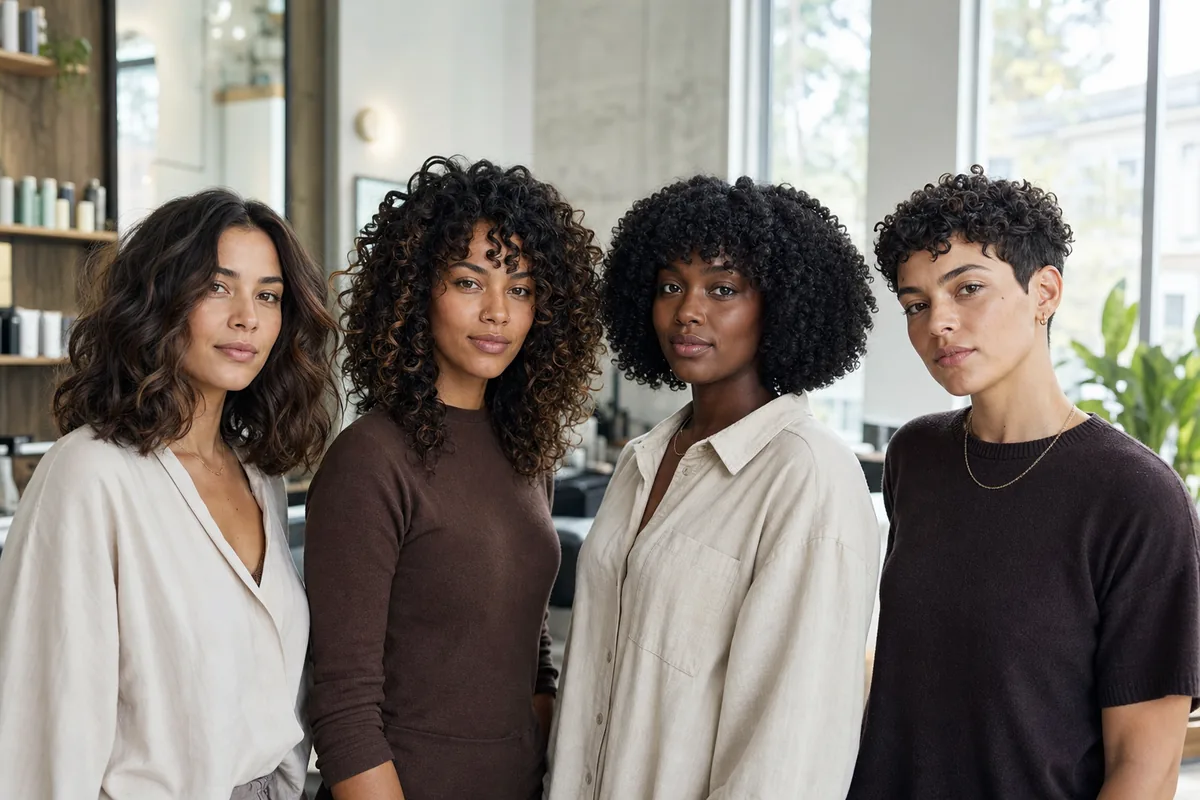
The best haircuts for curly hair create a clear shape when the curls are dry, leave enough weight where you need control, and place layers where they support movement instead of random volume.
Quick answer: choose the finished shape, not a curl-type label alone
Reliable starting points include a rounded layered bob, a collarbone curly lob, long U-shaped layers, a curly shag, a tapered crop, or a fade with a longer curly top. The right choice depends on how much your hair shrinks, where it expands, its density, your preferred length, and how much styling you will actually do.
Curl classifications such as 2A-4C are useful vocabulary, but many people have two or more patterns on one head. Density, strand thickness, porosity, damage and growth direction can change how the same reference cut behaves. Take photos of your hair dry on a typical day and ask the stylist to design for that real silhouette.
Haircuts for Curly Hair: Fast Decision Matrix
Start with the result you want, then adjust the cut for shrinkage and density.
| Main goal | Good starting cuts | Works best when | Ask your stylist |
|---|---|---|---|
| Reduce triangle shape | Rounded bob, lob, long layers | Weight collects at the ends and the crown looks flat | Build graduated or internal shape without thinning the perimeter |
| Keep maximum length | U-shape, long rounded layers | Ends remain healthy and shrinkage is predictable | Show the dry shortest point before removing length |
| Create crown lift | Curly shag, wolf-inspired layers, crop | Density can support shorter upper layers | Keep transition layers connected so the top does not look separate |
| Control high density | Long bob, internal layers, tapered shape | Hair expands widely or takes very long to dry | Remove bulk strategically, not with aggressive all-over thinning |
| Make fine curls look fuller | Blunt curly bob, low-layer lob, compact crop | The lower edge becomes see-through with too many layers | Protect a strong baseline and use only a few long layers |
| Low daily maintenance | Tapered crop, rounded bob, long low-layer cut | The shape still reads clearly after air-drying | Plan the cut around your usual wash-and-dry routine |
12 Curly Haircuts Worth Taking to Your Stylist
Use these as shape directions. A curl-experienced stylist should translate the reference for your shrinkage, density and face proportions.
Rounded layered bob
A rounded outline distributes width above the ends and avoids the heavy triangular effect common in one-length curls.
Salon request: Keep the outer shape full and connect layers through the sides.
Curly lob
Collarbone length gives enough weight for control while staying light enough for movement and root lift.
Salon request: Choose the dry finishing point and allow for shoulder bounce.
Layered shoulder cut
Long blended layers release selected curls without sacrificing the practical versatility of medium length.
Salon request: Place the shortest face-framing curl where it will land when dry.
Long U-shaped layers
A curved perimeter preserves length, prevents a boxy back view and lets long curls cascade instead of forming one shelf.
Salon request: Keep the center back longest and avoid short disconnected crown layers.
Curly shag
Shorter crown layers and a textured fringe make natural volume the feature rather than something to suppress.
Salon request: Agree on crown height and fringe shrinkage before cutting.
Wolf-inspired curly layers
A softer wolf direction creates top movement and longer back length without requiring an extreme mullet outline.
Salon request: Keep the sides connected and preserve enough weight around the temples.
Curly pixie
A pixie removes length weight and makes the curl pattern, forehead and cheekbones more visible.
Salon request: Leave extra dry length around cowlicks, hairline curls and the crown.
Tapered curly crop
A graduated nape and sides support a rounded or elongated curly top with a clean, manageable silhouette.
Salon request: Specify whether you want soft tapering or a sharper clipper finish.
Fade with curly top
Short sides concentrate texture on top and work especially well for people who prefer barbered edges and quick sides.
Salon request: Set the top length by dry curl height, not stretched length.
Curly fringe
A fringe can soften the forehead and connect face-framing layers, but it changes dramatically with humidity and shrinkage.
Salon request: Cut conservatively while dry and identify the shortest curl in the fringe zone.
Blunt low-layer bob
Fine or lower-density curls can look fuller when the baseline remains strong and layers stay minimal.
Salon request: Avoid razoring or over-thinning the ends.
Asymmetrical curly cut
A deliberate side-to-side difference works with uneven curl behavior and creates a graphic shape without needing perfect symmetry.
Salon request: Choose which side carries volume and confirm the outline from the front and back.
Match Curl Pattern, Length and Shrinkage
The visual curl category is only the beginning; the same cut can land at a very different length after drying.
Wavy to loose curls (2A-3A)
These patterns can lose definition when layers are too short or ends are over-texturized. A lob, long layers, shag-lite shape or rounded bob can add movement while preserving enough weight for clumping.
Springy curls (3A-3C)
Springier curls often support rounded bobs, shags, shoulder layers and tapered shapes. Measure where the shortest layers sit when fully dry, especially near the crown and fringe.
Coils and tight textures (3C-4C)
Coils can create strong sculptural shapes, from rounded crops to tapered cuts and long layers. Shrinkage may be substantial, so discuss whether the goal is a stretched, defined or natural-volume finish.
Mixed patterns
Treat each zone by behavior rather than forcing one layer formula across the whole head. The nape may shrink more, the crown may be looser, and one side may need different weight to look balanced.
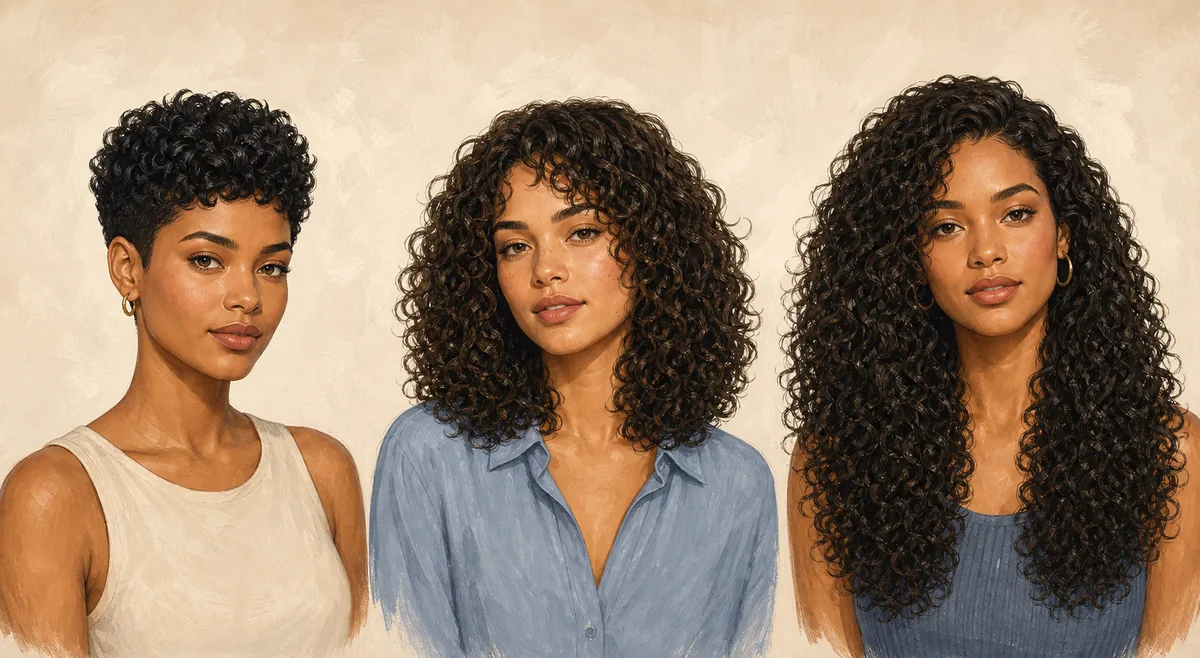
Adjust the Cut for Face Shape and Density
Face shape guides placement, not permission
A round face may benefit from height and length below the chin, while a long face may welcome width around the cheekbones. Square faces can use curved outlines; heart shapes may balance with jaw-level volume. These are starting points, not rules—preview the actual proportion.
Fine curls need protected edges
Fine strands or lower density usually benefit from a compact perimeter and fewer, longer layers. If the ends already look transparent, a dramatic shag may trade too much visual fullness for movement.
Dense curls need purposeful weight removal
High density does not automatically require thinning shears everywhere. Internal layers or carefully placed bulk removal can shorten drying time and improve movement while keeping the outer curl groups intact.
Growth patterns matter
Cowlicks, a strong part, a tighter nape and uneven temple curls can override a generic face-shape recommendation. Ask for a front, side and back check in the hair's natural resting pattern.
Preview the Overall Shape Before the Appointment
An AI haircut preview can help compare length, fringe, side width and the balance between crown volume and face shape. Use it to shortlist silhouettes rather than to predict individual curl behavior.
- Upload a clear front-facing photo with your hairline and shoulders visible.
- Compare one conservative option with one shorter or more layered direction.
- Check the outline at the cheeks, jaw, shoulders and crown.
- Save the result together with a real photo of your natural curl pattern for the stylist.
AI cannot measure shrinkage, porosity, density, damage, growth direction or how a stylist's technique will affect your exact curls.
How to Prepare for a Curly Haircut Consultation
A useful consultation describes everyday behavior, not only the polished reference photo.
- Arrive with representative hair. Follow the salon's instructions, but avoid a style that hides your normal shrinkage or parting unless the appointment specifically requires it.
- Show two kinds of photos. Bring an inspiration image plus photos of your own hair on a good day and a difficult day. The contrast reveals volume, frizz and shrinkage patterns.
- Name your non-negotiables. State the shortest acceptable dry length, whether you wear a fringe, how often you tie hair back, and how much daily styling is realistic.
- Agree on the finish used to judge the cut. Clarify whether the final shape will be assessed air-dried, diffused, stretched or fully defined, because each finish changes the visible silhouette.
- Ask for maintenance timing. The ideal trim interval depends on the cut shape, damage and growth rate. Ask what signs indicate that the silhouette—not just the calendar—needs refreshing.
Keep the Cut Looking Intentional
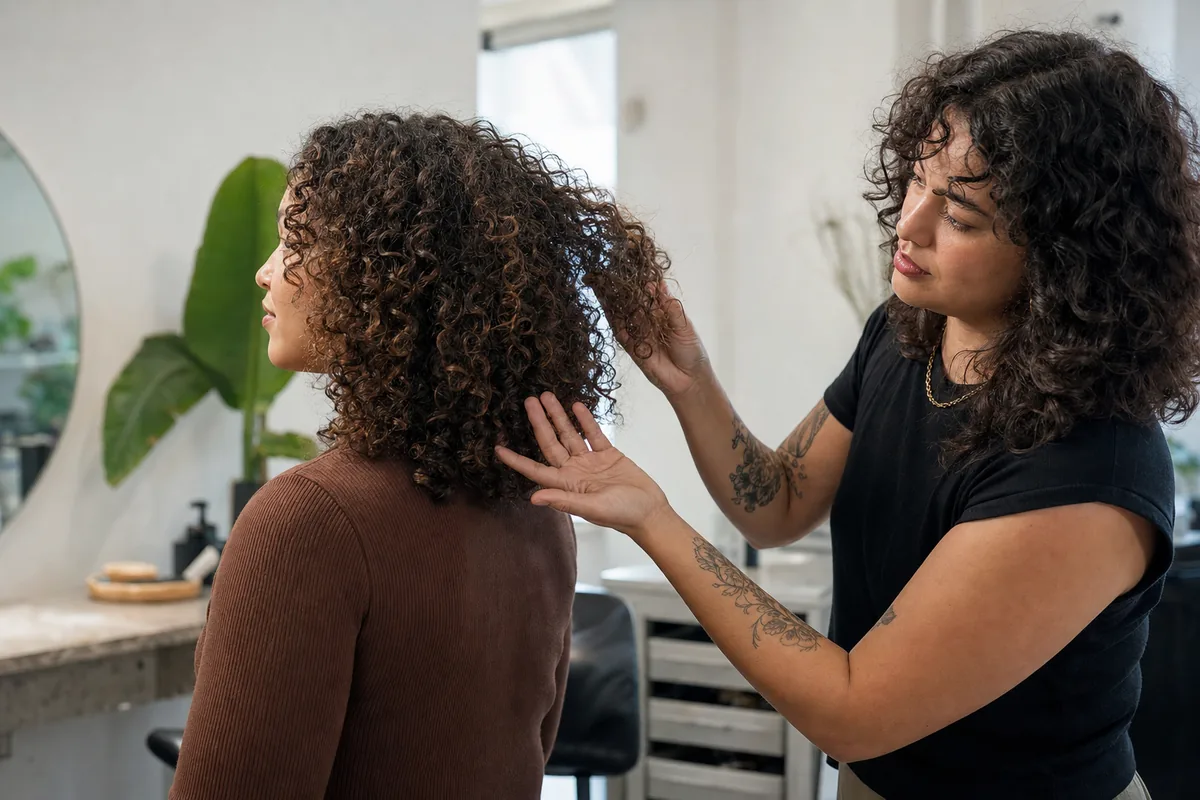
Protect curl groups while detangling
Detangle gently with slip, usually when damp or wet according to your routine. Rough dry brushing can separate curl groups and make the haircut look wider or less defined than intended.
Use product weight strategically
Loose or fine curls often prefer lighter leave-ins and foams; denser or tighter textures may need richer moisture and stronger hold. Start with less and add only where the shape collapses or frizzes.
Dry for the silhouette you chose
Air-drying preserves ease, while diffusing can add root lift and definition. Direct the roots and sides deliberately so the finished width and crown height match the haircut plan.
Refresh by shape, not trend date
Book a trim when the perimeter loses balance, the crown stops lifting, knots increase, or split ends interfere with curl grouping. A shorter structured cut usually shows growth sooner than long layers.
Common Curly Haircut Mistakes
Copying a reference with a different density
A layered cut on very dense curls can look sparse on lower-density hair. Match the reference's curl size, density and shrinkage as closely as possible.
Ignoring the dry shortest point
Wet or stretched length can disguise how high a fringe, crown layer or nape curl will spring. Confirm the dry landing point before committing.
Removing bulk everywhere
Uniform thinning can create frizz, weak ends and short pieces that escape curl groups. Weight removal should solve a named shape problem in a specific zone.
Choosing a cut for a routine you will not follow
A high-layer style may look excellent after careful diffusing but different after a quick air-dry. Select the cut for your normal week, not only a salon finish.
Haircuts for Curly Hair FAQ
What is the best haircut for curly hair?
There is no universal winner, but rounded layered bobs, curly lobs, long U-shaped layers, shags and tapered crops are adaptable starting points. The best choice preserves the weight you need and creates the dry outline you want.
Should curly hair be cut in layers?
Often, but the amount and placement matter. Layers can release movement and prevent a triangle shape; too many short layers can create excess width or make fine curls look thin.
Is a dry cut always better for curly hair?
Not always. Dry cutting shows the natural landing point of each curl, while wet cutting can provide consistent structure and tension control. Many stylists combine methods. Technique matters less than the stylist understanding your pattern and intended finish.
What haircut is best for fine curly hair?
A blunt or low-layer bob, compact lob, or short crop often protects visual fullness. Keep the perimeter strong and add only enough layering to prevent flatness.
How short should curly bangs be cut?
Start longer than the desired dry result and account for the tightest curl and normal humidity. The stylist should check the fringe in its natural dry state before taking off more length.
Can I preview curly haircuts on my own photo?
Yes. A virtual preview is useful for length, fringe and overall proportion, but it cannot predict your exact curl pattern, shrinkage, density or finished salon result.
Continue Your Haircut Decision
AI Haircut Visualizer — Compare the length, fringe and silhouette of several cuts on your photo.
What Haircut Should I Get? — Balance texture with face shape, lifestyle and maintenance.
Hairstyles for Face Shape — Refine where volume and face-framing layers should land.
Hairstyles for Thin Hair — Protect visual fullness when curly hair is also fine or lower-density.
Short Hair Filter — Compare a pixie, crop, bob or other shorter outline before cutting.
Expert and Technical Reading
Vogue: curly layered haircuts by face shape
Stylist guidance on adapting layered curly cuts to face proportions and the actual curl pattern.
Allure curl pattern guide
A practical overview of curl-pattern language and why texture knowledge supports care and styling decisions.
L'Oréal Professionnel hair type lesson
Professional education material describing straight, wavy, curly and coily pattern categories.
Shortlist Your Curly Haircut Before the Salon
Compare a bob, lob, shag, crop, fringe or long layered shape on your photo, then discuss shrinkage and density with your stylist.
Preview Haircuts for Curly HairThis guide compares haircuts for curly hair, curly haircuts for women and men, curl-pattern choices, salon requests and realistic preview limits.