
12 Best Haircuts for Straight Hair by Length and Density
The best haircuts for straight hair use the clean visibility of the texture: a strong perimeter for fullness, deliberate layers for movement, and face framing placed where it can be seen without daily curling.

Quick answer: match the cut to density before choosing layers
Reliable starting points include a blunt bob, a collarbone lob, long U-shaped layers, a butterfly-inspired cut with restrained face framing, a pixie, a textured crop, or a medium cut with invisible internal layers. Fine straight hair usually benefits from a stronger edge and fewer layers; thick straight hair can use controlled internal weight removal so the shape moves without looking bulky.
Straight hair makes precision visible. Uneven ends, disconnected layers and over-thinning are harder to hide than they are in textured hair. Decide first whether you want fullness, movement, easy air-drying, a sharper outline or less bulk, then take front, side and back reference images to your stylist.
Choose reference photos with density and natural fall similar to yours. A cut shown only with waves, extensions or a high-volume blowout may look much flatter in daily wear. Ask for a shape that remains clear after your normal wash and dry routine.
Haircuts for Straight Hair: Fast Decision Matrix
Start with the problem you want the haircut to solve, then adjust for strand thickness and density.
| Main goal | Good starting cuts | Works best when | Ask your stylist |
|---|---|---|---|
| Make fine hair look fuller | Blunt bob, compact lob, one-length shoulder cut | The ends look thin or transparent | Protect a dense baseline and keep layering minimal |
| Add movement without losing length | Long U-shape, long blended layers | Hair hangs flat but the perimeter is healthy | Keep the shortest back layer below the shoulder |
| Reduce bulk in thick hair | Long lob, internal layers, soft taper | The shape feels heavy through the sides and ends | Remove weight inside while preserving the outside line |
| Frame the face | Curtain fringe, cheekbone pieces, butterfly-lite layers | You style the front but wear the back mostly straight | Set the shortest piece for your normal part and tuck routine |
| Choose a short cut | Pixie, bixie, textured crop, short bob | You accept more frequent shape maintenance | Check cowlicks, crown direction and the hairline before cutting |
| Keep daily styling simple | Blunt lob, shoulder cut, long low layers | You prefer air-drying or a quick blow-dry | Design the outline for your natural dry result |
12 Straight Hair Haircuts Worth Comparing
Use each name as a shape direction, then adapt the perimeter and layer depth to your density, part and maintenance routine.
Blunt bob
A clean jaw-to-chin perimeter makes fine or medium straight hair look deliberate and visually dense.
Salon request: Choose the dry finishing point and keep the baseline solid.
Collarbone lob
This versatile length clears the shoulders enough to move while remaining easy to tie back and style straight.
Salon request: Keep the front slightly longer if the ends flip on the shoulders.
One-length shoulder cut
A strong outline supports fine strands and gives straight hair a polished shape with minimal daily work.
Salon request: Avoid hidden short layers if the lower edge already looks light.
Long U-shaped cut
The curved back keeps center length while softening the square look that very long straight hair can develop.
Salon request: Preserve the center and connect only long, low layers.
Long blended layers
Subtle layers create swing and reduce heaviness without turning straight hair into separated steps.
Salon request: Keep transitions long enough to remain smooth when air-dried.
Butterfly-lite layers
Face-framing pieces and restrained upper layers add lift around the cheeks while protecting overall length.
Salon request: Use fewer, longer layers than a highly styled butterfly cut.
Curtain fringe with long hair
A split fringe adds movement around the eyes and cheekbones while blending back into longer straight lengths.
Salon request: Set the fringe for your natural part and whether you tuck it behind the ears.
French bob
A shorter, graphic bob emphasizes the jaw and works well when you want a recognizable shape rather than hidden layers.
Salon request: Agree on chin, lip or jaw length before the first cut.
Bixie
The space between a bob and pixie keeps some softness while removing the flat weight of longer straight hair.
Salon request: Leave enough length around cowlicks and the ears for your preferred finish.
Pixie cut
A pixie highlights bone structure and can give fine straight hair a cleaner silhouette than a limp mid-length cut.
Salon request: Map crown growth, fringe direction and neckline maintenance.
Textured crop
Short broken texture can create separation in straight hair without relying on curls or a long styling routine.
Salon request: Use point cutting strategically and avoid thinning the entire top.
Soft undercut or tapered sides
For dense straight hair, controlled shorter areas can remove bulk while keeping a longer top or bob shape.
Salon request: Confirm how the shorter section will look as it grows out.
Match Length, Strand Thickness and Density
The same layer pattern behaves differently on fine low-density hair and coarse high-density hair.
Fine or lower-density straight hair
Keep the lower outline compact. A blunt bob, lob, shoulder cut or pixie can make the available hair read as one intentional shape. Add only enough layering to prevent flatness, because short layers can expose scalp or make the ends look sparse.
Medium-density straight hair
This density can support most shapes, from bobs to long layers. Decide whether the priority is a crisp perimeter or more movement, then keep the layer transitions connected so the haircut looks good without a curled finish.
Thick or coarse straight hair
A completely blunt long cut can feel heavy and expand at the ends. Long blended layers, internal weight removal or a soft taper can reduce bulk, but aggressive thinning can create flyaways and a weak perimeter.
Short, medium and long lengths
Short cuts expose growth direction and require more frequent shaping. Medium cuts interact with the shoulders and may flip. Long cuts need a purposeful back outline and enough movement to avoid a flat, curtain-like result.
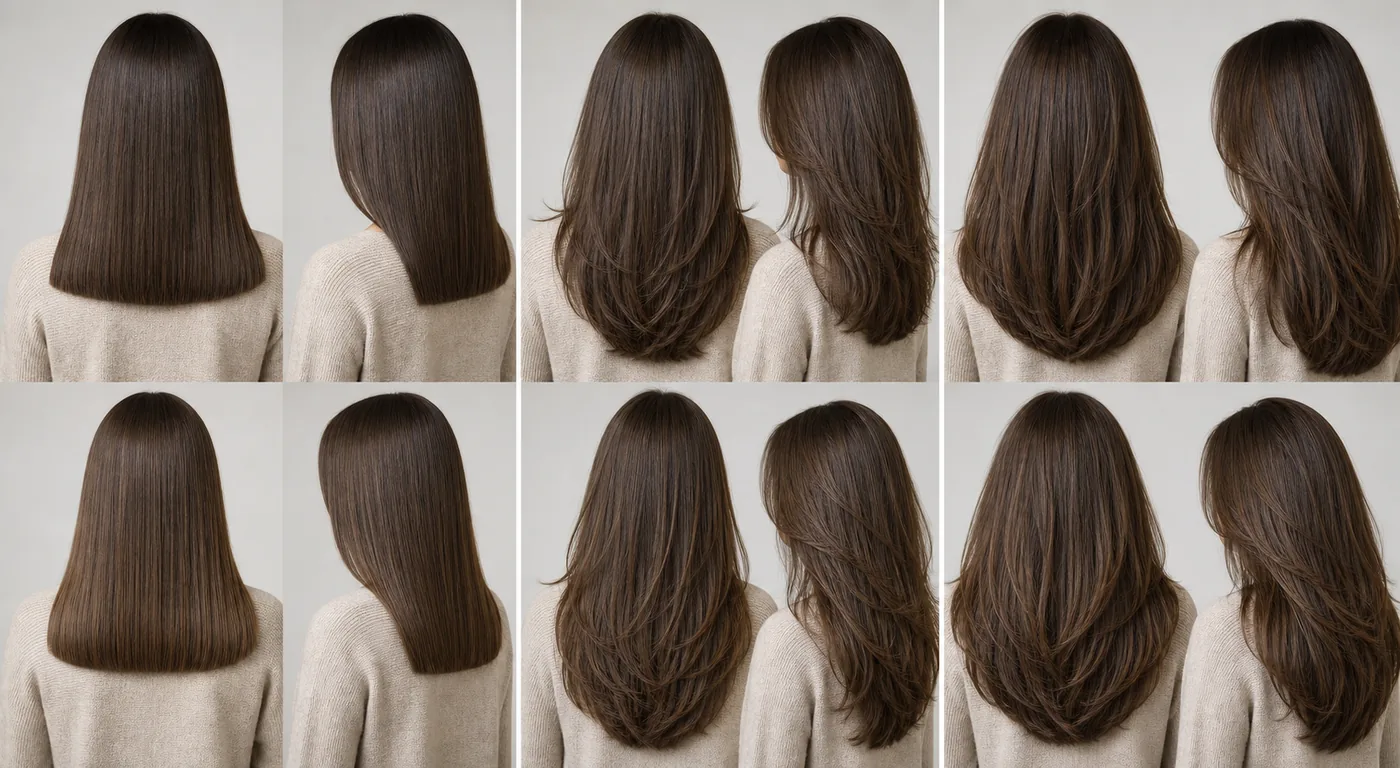
Adjust the Cut for Face Shape and Everyday Styling
Oval faces can choose by hair behavior
Most lengths can work, so prioritize density, parting and maintenance instead of chasing a supposedly perfect face-shape formula.
Round faces often benefit from deliberate vertical lines
Length below the chin, a slightly longer front, an off-center part or face framing that starts below the cheek can create a longer visual direction. Volume at the sides is optional, not forbidden.
Square and heart shapes need placement choices
Soft ends around the jaw can contrast a square outline, while heart shapes may prefer width near the jaw. A blunt graphic cut can also be intentional; preview the proportion rather than following a rigid rule.
Your normal routine is the final filter
If you rarely blow-dry, choose a cut that works straight and air-dried. If you tuck your hair, wear glasses, switch parts or tie it back daily, show those habits during the consultation because they change where face-framing pieces should land.
Preview the Silhouette Before You Cut
An AI haircut preview can help compare length, fringe, parting and the balance between a blunt outline and visible layers. Use it to shortlist shapes, then confirm technical details with a stylist.
- Upload a clear front-facing photo with the hairline, jaw and shoulders visible.
- Compare one strong-perimeter option with one layered option.
- Check where the shortest front piece lands around the eyes, cheeks and jaw.
- Save the preview with side and back reference photos for the consultation.
AI cannot measure density, strand diameter, cowlicks, damage, growth direction or the precision of a real salon cut.
How to Ask for a Straight-Hair Cut
Clear salon language prevents vague requests such as “add movement” from turning into more layering than you wanted.
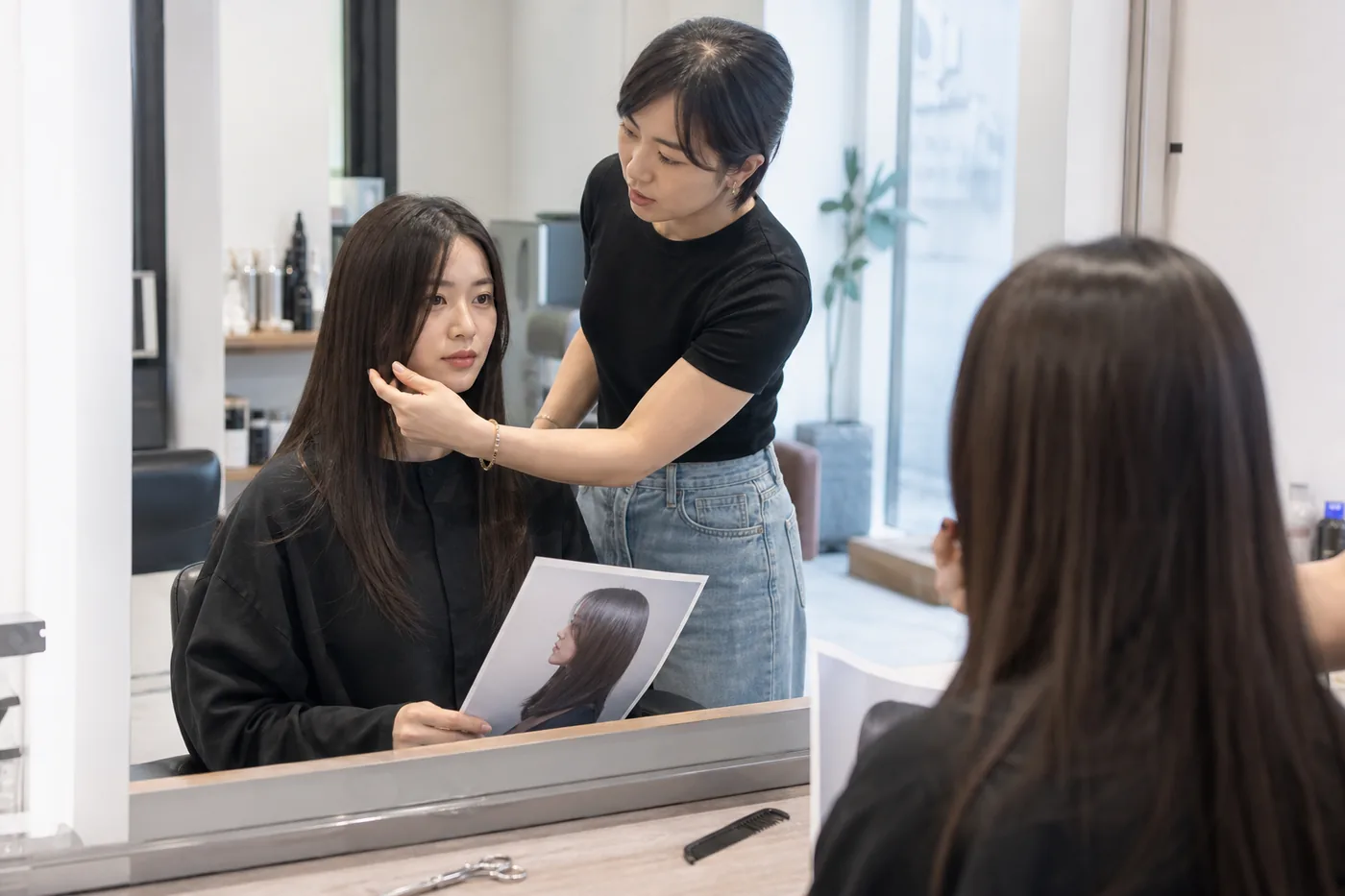
- Name the main goal. Say whether you want fuller ends, less bulk, easier air-drying, visible movement, a sharper outline or a shorter shape.
- Set a dry length limit. Show the shortest acceptable point at the front and back, especially when the shoulders may make medium hair flip.
- Describe the layer boundary. State the shortest layer you accept and whether you want visible face framing, invisible internal layers or no layers at all.
- Show your normal part and habits. Tuck the hair, put on glasses, move the part and demonstrate a ponytail so the cut supports daily use.
- Confirm the finishing test. Ask to review the outline while the hair is straight and moving naturally, not only after curls or a heavily styled blowout.
Keep Straight Haircuts Looking Intentional
Protect the perimeter
Straight ends reveal splitting and unevenness quickly. Use heat protection when styling, trim when the outline becomes transparent or rough, and avoid repeatedly passing hot tools over the same ends.
Use lightweight root support
Fine straight hair can collapse under rich products. Apply lighter formulas near the roots and reserve heavier oils or creams for dry mid-lengths and ends.
Direct the blow-dry for the cut
A blunt bob benefits from a smooth downward finish, while layers need airflow that encourages separation and swing. You do not need curls to show movement.
Refresh according to shape
A pixie, crop, fringe or sharp bob shows growth sooner than long layers. Book maintenance when the intended outline disappears rather than following one universal calendar.
Common Straight-Hair Haircut Mistakes
Adding short layers to create automatic volume
Layers remove weight; they do not guarantee root lift. On fine hair, too many short layers may reduce fullness instead of creating it.
Copying a styled reference
A haircut photographed with waves, round-brush volume or extensions may look different when worn naturally straight. Find at least one reference showing the cut uncurled.
Thinning thick hair everywhere
Uniform thinning can create flyaways, weak ends and short pieces that push outward. Ask which zones actually need weight removed.
Ignoring shoulders, cowlicks and the part
A collarbone cut can flip, a fringe can split, and a pixie can stand up where growth changes direction. Design for these physical details before choosing the final length.
Haircuts for Straight Hair FAQ
What haircut is best for straight hair?
A blunt bob, collarbone lob, long U-shaped cut, long blended layers, pixie or textured crop can all work. The best choice depends mainly on density, strand thickness, desired length and how much styling you will do.
Should straight hair be layered?
It can be. Long connected layers add movement to medium or thick straight hair, while fine or low-density hair often looks fuller with fewer layers and a stronger perimeter.
What haircut makes thin straight hair look thicker?
A blunt bob, compact lob, one-length shoulder cut or structured pixie often protects visual density. Avoid excessive thinning and very short disconnected layers through sparse areas.
What are good haircuts for men with straight hair?
Textured crops, side parts, curtains, crew cuts, tapered styles and longer layered tops can work. Choose by density, growth direction and the amount of styling product you want to use; the men's hairstyle preview page can help compare silhouettes.
How do I stop thick straight hair from looking bulky?
Use long blended layers, internal weight removal or a controlled taper rather than thinning every section. Preserve enough perimeter weight so the ends still look healthy.
Can I preview straight haircuts on my photo?
Yes. A virtual preview is useful for comparing length, fringe and overall shape, but it cannot predict strand behavior, cowlicks, density or the precision of the final salon result.
Continue Your Haircut Decision
AI Haircut Visualizer — Compare blunt, layered, short and long haircut silhouettes on your photo.
AI Hairstyle Changer for Men — Preview crops, side parts, curtains and other men's straight-hair directions.
What Haircut Should I Get? — Balance texture with face shape, lifestyle and maintenance.
Hairstyles for Thin Hair — Protect fullness when straight hair is also fine or lower-density.
Hairstyles for Face Shape — Refine the placement of fringe, length and face-framing pieces.
Hair Type and Styling References
Allure hair type guide
Background on the widely used straight, wavy, curly and coily texture categories.
L'Oréal Professionnel hair type lesson
Professional education material describing hair pattern and strand characteristics.
Shortlist Your Straight-Hair Cut Before the Salon
Compare a blunt bob, lob, long layers, fringe, pixie or crop on your photo, then discuss density and maintenance with your stylist.
Preview Haircuts for Straight HairThis guide compares haircuts for straight hair, straight hair hairstyles for women and men, density choices, salon requests and realistic preview limits.